
The 2006 CES Show was what I would define as THE penultimate show I ever attended (at least, so far) as it was the final show before what I would define as the loss of innocence for humanity. This was “techs” last proud and unabashed hodgepodge of immature toe-dipping into modern technology before the tsunami of truly scary modern times, like AI, began its creep inexorably into everyone’s lives. This was the actual beginning of the expression of the “Camel’s nose under the tent”. Looking at my pictures and notes from the show left me more than a little bit flabbergasted at how inured and complacent people (for the most part) have become since. Comparatively speaking, the 2006 era was the literal last gasp for privacy … a more “unconnected” time and that time will never come again. Personally, I believe we had more in common with the 1950’s in 2005, than what we have today, with the year 2005. At that time, the things I privately thought were coming, have arrived years faster than expected. Before we examine at how things transpired a decade later than 2006 in my next posting, here’s a few examples and observations of a time long gone now.
The year 2005 was a big one as far as the consumer electronics industry was concerned … a record one in fact and everyone knew that 2006 was going to be even larger. After all, 7307 flat-screen TVs were sold at an average price of $1121 (over $2,000 today, before tax) and they were finally entering mass production and increased demand. Never mind these sets were tiny by today’s standards (50 inches diagonally and less) … compared to even the biggest cathode-ray sets, they were considered huge and very unique with most less than six inches of depth. Sharp even had a “HD” projection cabinet model in sizes of 80, 90 and 100 inches. However, it wasn’t as flat as a plasma panel at 30 inches of depth … you’d need a huge room for this thing! I can only assume this monstrosity kluge was delivered to your house in multiple boxes after seeing it.
Toshiba unveiled a flat-screen TV with a built-in DVD player. After adding the DVD player, it wasn’t exactly “flat” any longer.
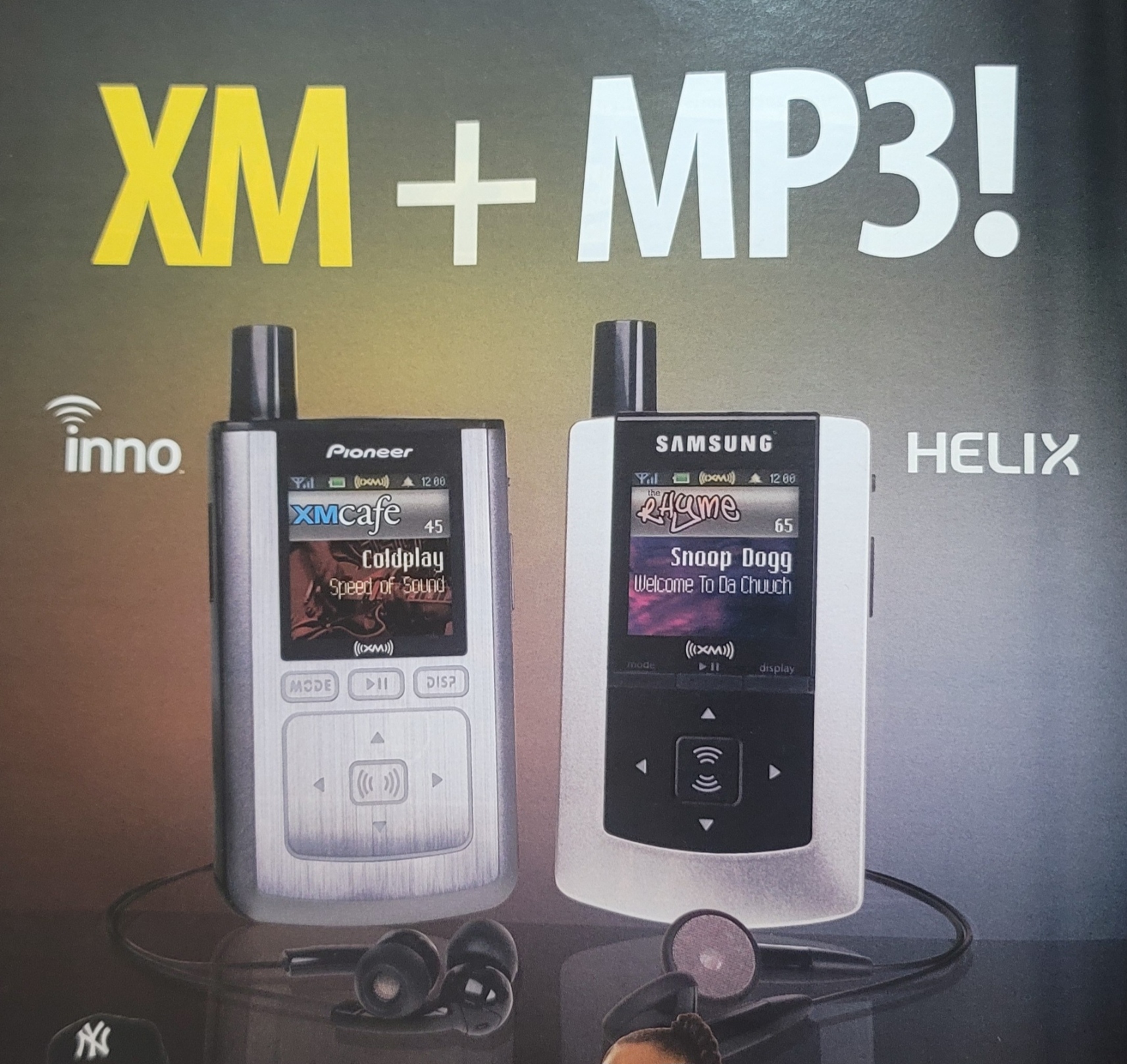
XM satellite radio introduced a pocket-size receiver that played MP3’s as well as picking up the live XM microwave signal when you’re outdoor. Both Samsung and Pioneer showed a device (the Inno and Helix, respectively) that looked eerily like the “flip phones” of the day, but it didn’t have that function … so it was a bit thick.
Dish Network was presenting “Voom” … for those with HD sets … and of course, a higher price and limited content.
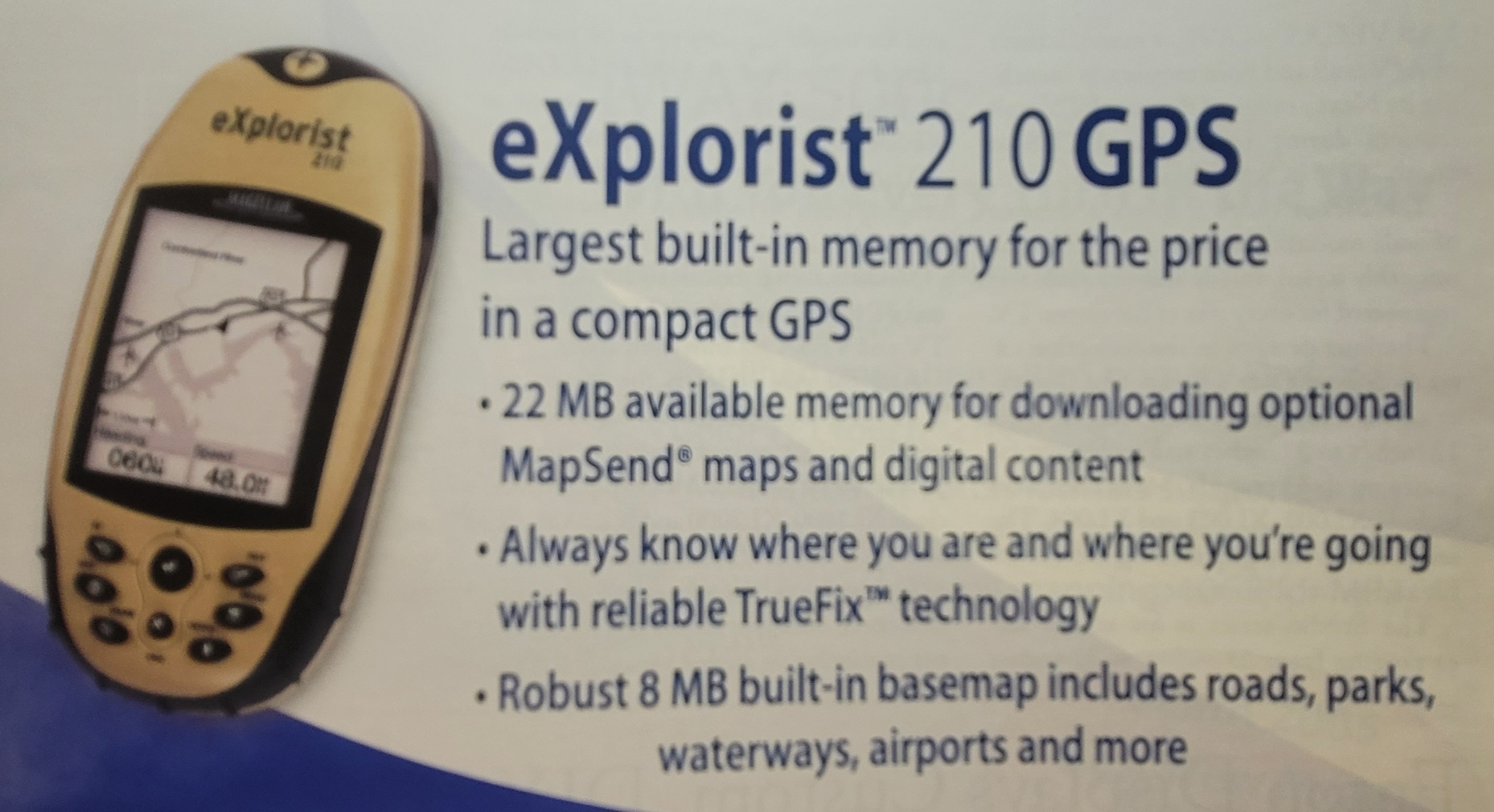
Handheld GPS units were everywhere, but most didn’t have actual maps … just a crude drawing of where you had traveled and a numeric location display. Those with actual maps were low definition, slow and had to be loaded by memory cards in order to have the map you wanted. Take it outside the US and need that info? … well, that’ll cost ya’. Most owners of cars with built-in GPS faced a huge bill simply to upgrade to a more current map. My Mercedes E-class update cost over $650, plus tax (in 2025 bucks, that’s almost $1200!) … I told M-B, no thanks. Magellan had a 3.5-inch GPS (eXplorist XL) with a very basic US map and a crude display for $299 in 2006 dollars. In 2005/6, GPS wasn’t cheap or truly helpful regardless of how you bought it.
Various kinds of tech were shown for an expected 3D flat-screen TV explosion once there was an established standard … yeah, we all know how that turned out.
Thunder Eyes, what we would call “smart glasses” today, went on sale … as one could imagine, they looked ridiculous and worked even less well … imagine glasses for the Borg in Star Trek.

People WERE buying 1080i (1080 interlaced) TVs, but they were much more expensive with virtually NOTHING to watch … but you did have bragging rights that you did own an actual HD TV, not the sad 720i version. The 1080i sets sold today are considered the extreme minimum in performance that ANY manufacturer sells in the US … primarily “bottom-of-the-line” stuff that is hard to find any longer. It’s worth noting that in Japan, Sony was selling the Qualia 1080i projector … one problem, it was $30,000! Additionally, they were releasing the Sony KDL-40×1000 … a 4K set … and, they had content for it!
MPEG4 digital compression was being released … although not the best, it’s essentially the most common standard today. Without digital compression, pretty much all video would consume an unimaginable amount of storage and dramatically slow the internet to a crawl. If you have a very large data file, compression can, in some cases, reduce the size by a factor of 200 … that’s not 200%, that’s 200 times! It’s easy to see how that is extremely vital for a digital society today.
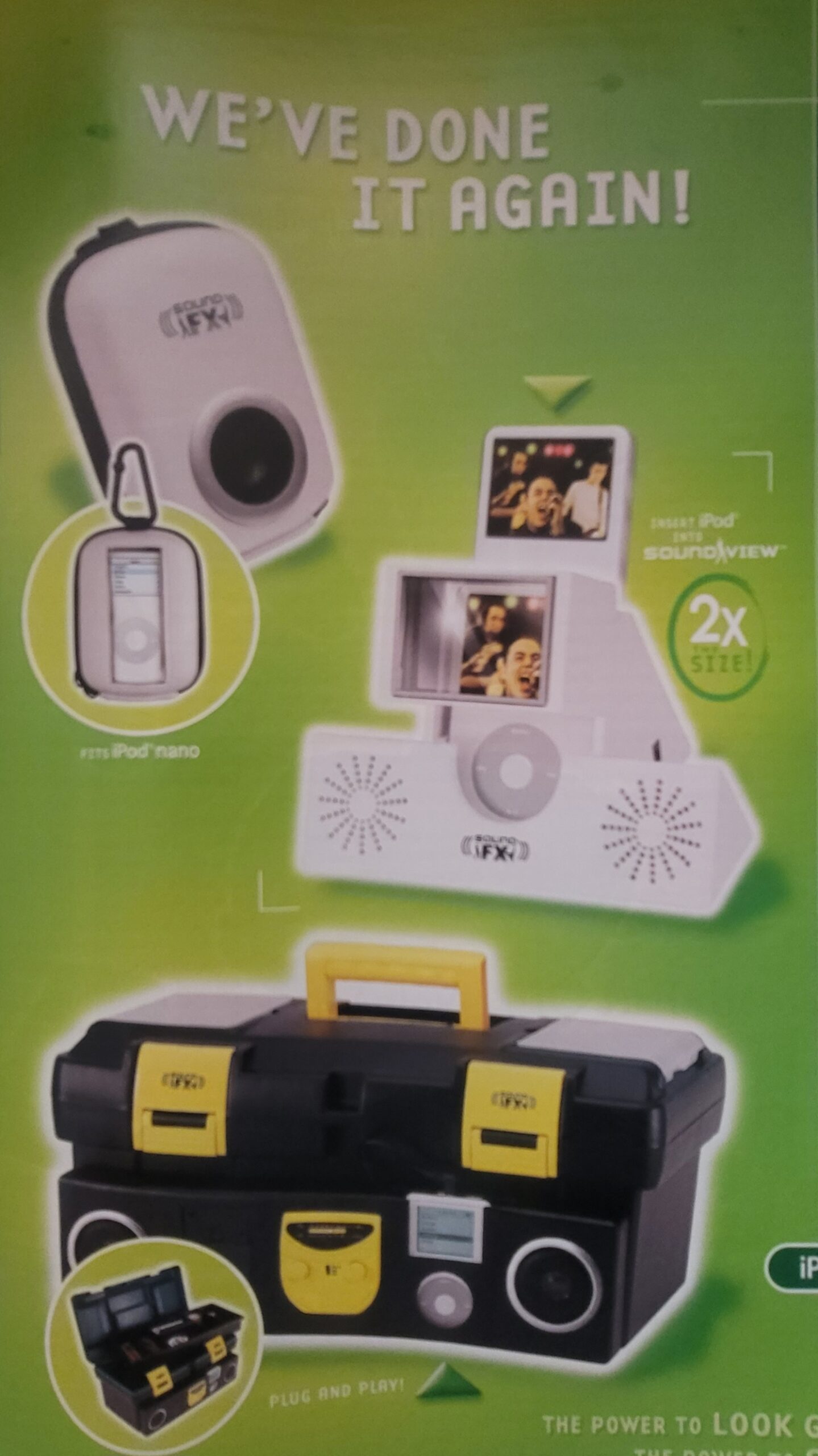
The race was on for companies vying for the most ridiculous way to listen to an iPod without using headphones. There was a company showing a backpack with flip-out side flaps that had speakers as an alternative to carrying the old boomboxes on your shoulder. But, these particular folks (Sakar) got my vote. The model with the easily scratched plastic and distorted magnifying lens for the 2.5 inch screen, giving it the “big screen” effect to watch videos is what tipped my vote towards them. Although, not quite as entertaining/absurd as the baseball cap (January 7, 2010) that would be introduced later with a truly huge bill that held a phone and used flip down plastic lenses for a theater-like experience and guaranteed sore neck and headache. The tool box with built-in speakers is actually being made by other companies today for job sites … they just use Bluetooth instead of an iPod.
Sales of DVD recorders were expected to double again. Folks with ReplayTVs and Tivos were using computers with special software and dedicated stand-alone machines to burn DVDs to save their shows. Yes, it was a LOT of work and time to do this. I still have hundreds of blanks I never used.
There was a battle brewing over regular CDs and high resolution SACDs … so the DualDisc was invented that could play both. When was the last time you bought a CD? Seemed really important to the music industry back then … but outside of audio fanatics, no one cared.
Want to adapt your iPod to your existing car stereo? Harman Kardon had just released this “simple to install” kit … this is mine and I didn’t find it simple in any respect.

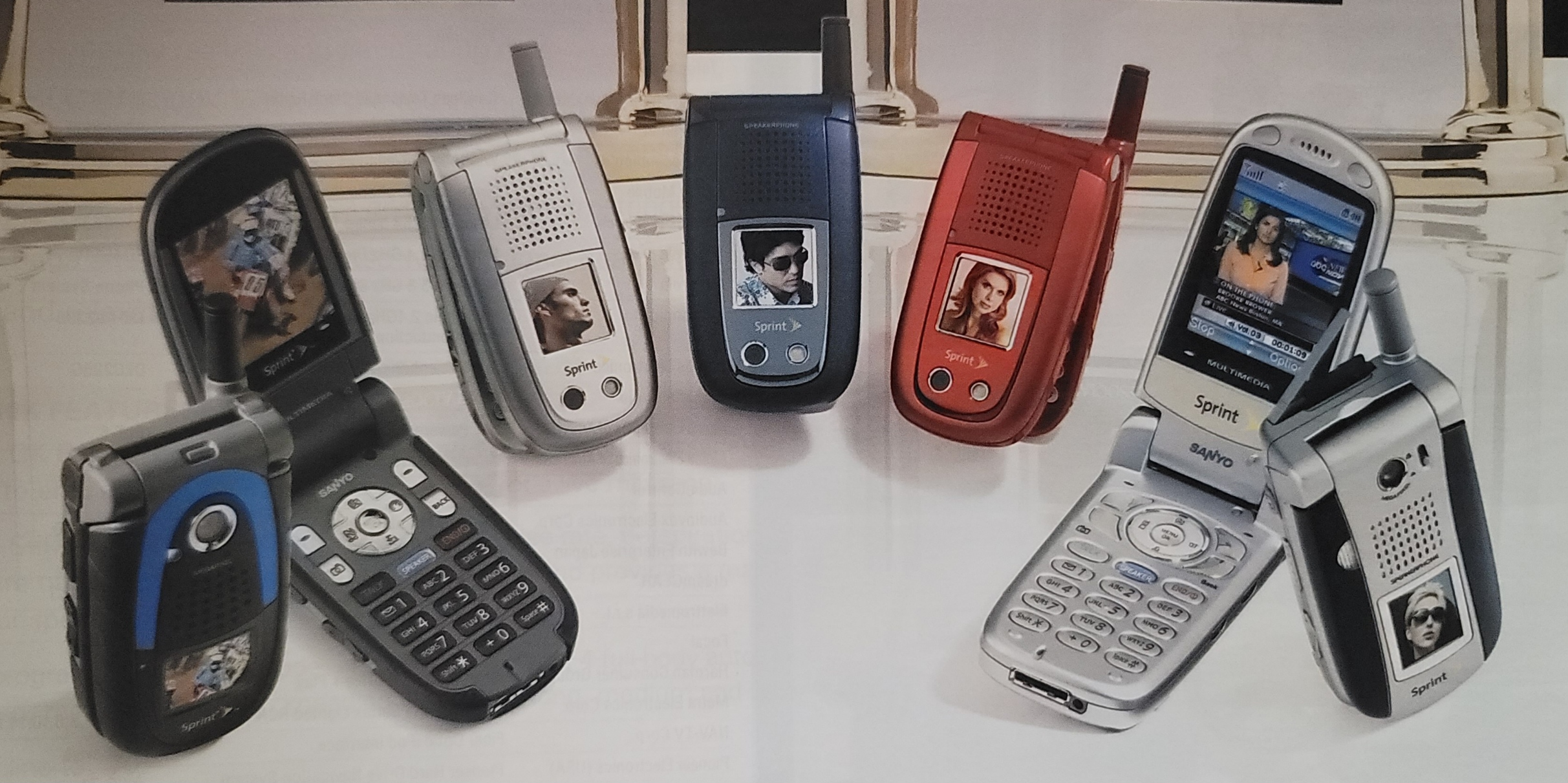
Sanyo introduced what was about to be their final “flip phones” … they just didn’t know it even though the iPhone introduction was less than a year away and the entire market for those types of phones would collapse almost overnight.
The “Personal Media Player” (PMP) were being made seemingly by almost everyone. This device played audio and video, and some even had photo capability. Today, I don’t know of any brand making these any longer.
For those who like to play games on their digital cameras, Fuji had the camera below available. Whoever thought this was a good idea should find another line of work …

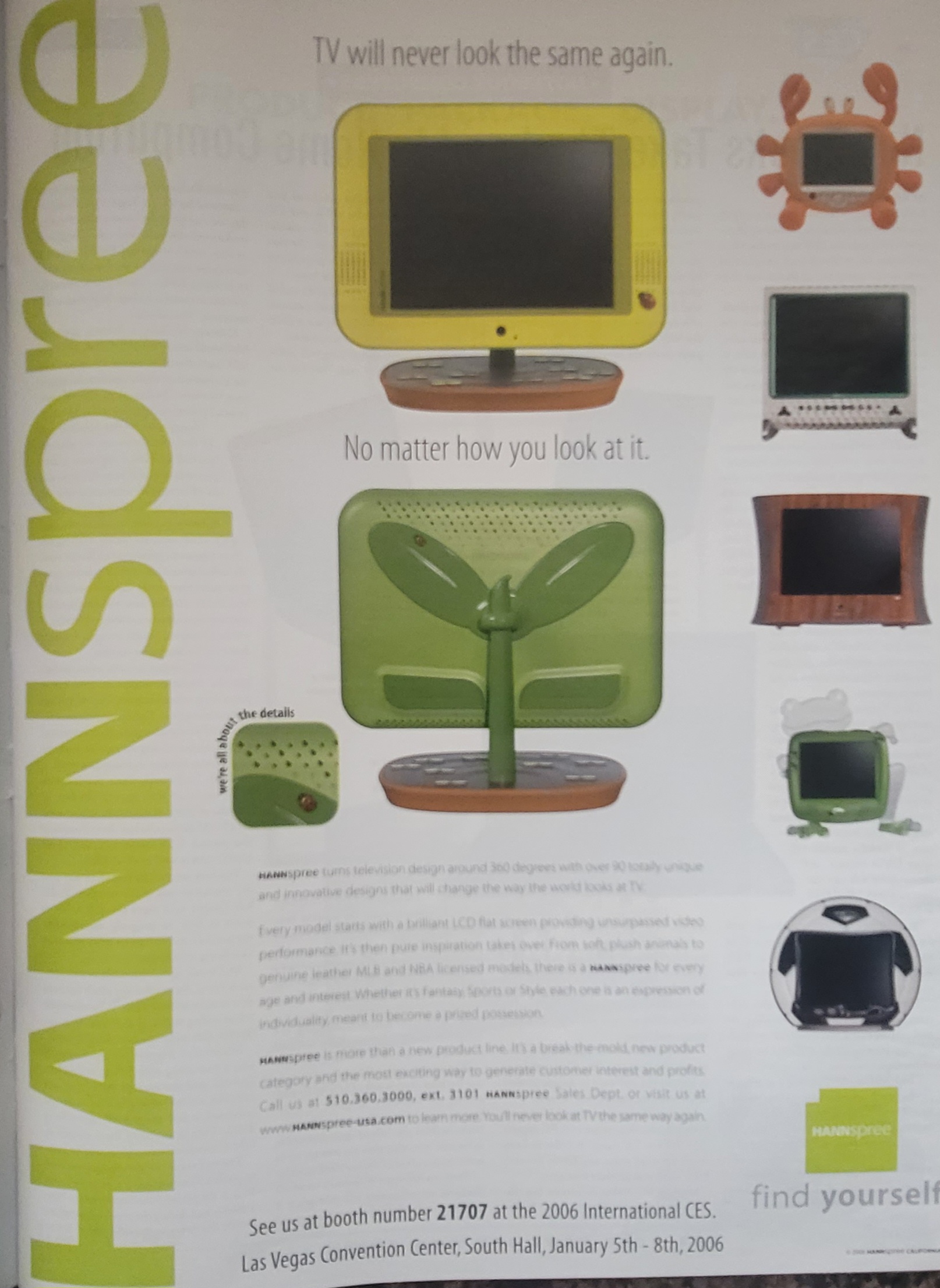
Hanspree felt that giving their cheap low-def TVs a ridiculous looking case would drive customers to the stores.
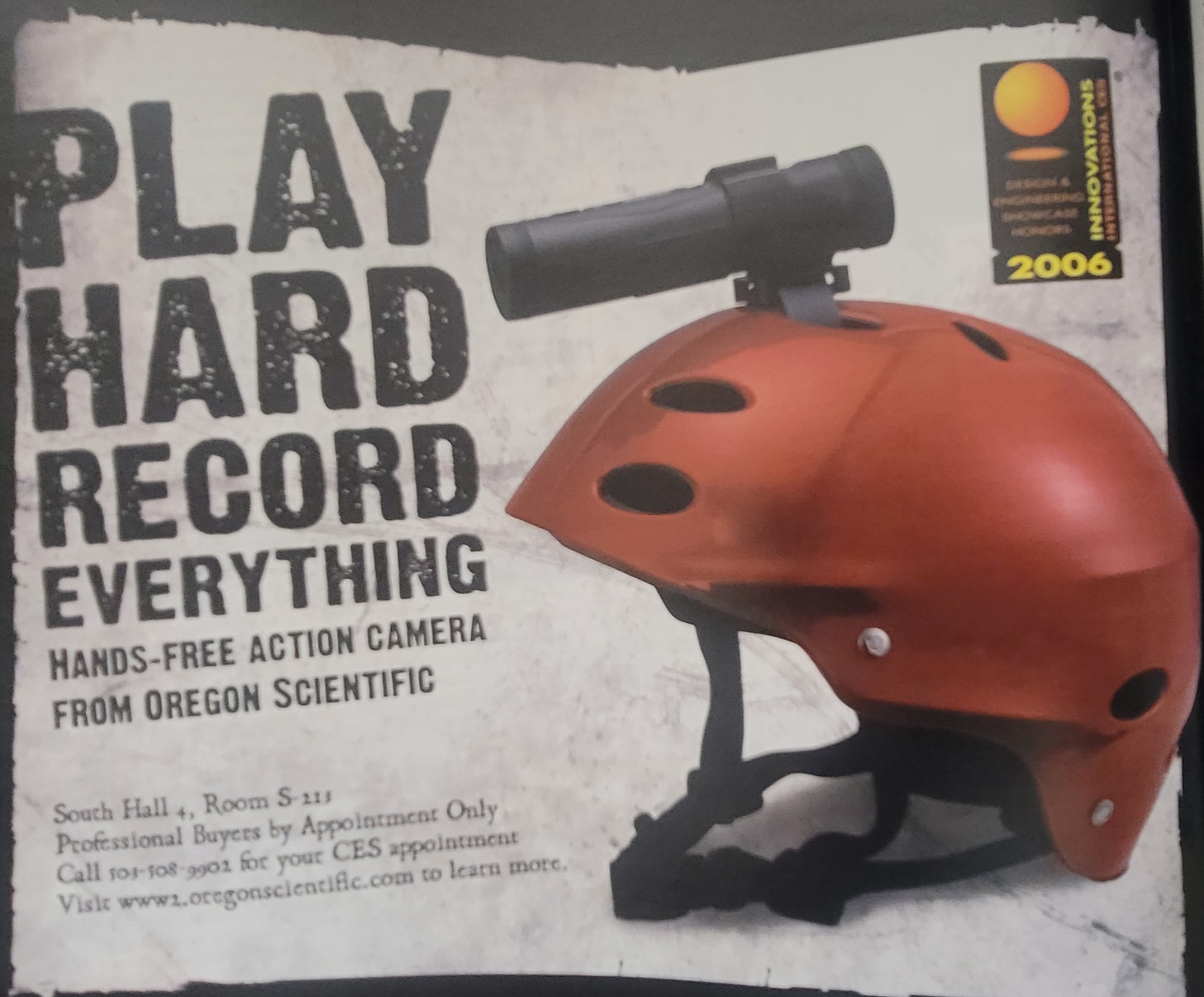
Oregon Scientific seemed to think the consumer was looking for a poorly balanced flashlight looking thing for action videos. It even won an “Innovation” award … I can only surmise the voters had never heard of GoPro which had released a far superior product the year earlier.
In booth #7144 was Microsoft with this gem of an operating system … My heart goes out to all who suffered with this mess. Even the MS guys couldn’t tell me a good reason to have it, beyond the words “new and improved.” The other words MS used to describe it (Confident/Clear/Connected) weren’t exactly the words their users were saying … those words all had only four letters each.

A company called “Lingo” had a translator that looked like a PMP (see above) … being clumsy, bulky and slow doomed it before they decided to try to sell it … too bad they probably never tried to actually use it in a real-life situation or they’d never have wasted their investors’ money on it.
LG came out with a TV with a DVR in it … the public didn’t know what DVR meant and LG had to explain it. The booth people didn’t actually know how it worked, but it sounded cool at the time I guess. ReplayTV had established PVR (personal video recorder) as the name for this kind of device years earlier. But after its demise, due to Tivo and such, the nomenclature “DVR” became the defacto abbreviation.
Today is like science fiction when you look at the advancements on all the devices at that show. The smartphone alone has essentially eliminated stand-alone GPS, MP3 players, satellite radio (replaced by streaming), cameras, foreign language translation, audio-only capable cellphones all the while having a 4K screen, UWB RF capability (along with an app, it’s what a Tesla uses as a key) and so much more. TVs have gotten to the point that there is actually no longer a size limit … want a ¼ mile long set? Samsung makes a modular commercial model that will do exactly that. Now 4K TVs are starting to look passe as 8K and above have been shown for the last couple of years. New pro level video cameras can shoot at that resolution and above. Whereas in 2006, trying to adapt anything to your car only resulted in a bird’s nest of exposed wires and absurd hacks … now we just Bluetooth into the car’s entertainment system in a few moments and off we go! Forget downloading a few songs to your phone when you essentially have the entire music library of the free world only a few taps away to stream wirelessly to your stereo Bluetooth Apple Air pods. Realtime translation is a reality now and it’s free!
In short, the future leapfrogged past what anyone twenty years ago thought possible. Remember, it took 24 years just to go from the telephone to the first successful test of wireless transmission of a human voice. The jump to LED lighting from an incandescent light bulb required 83 years. Changes/breakthroughs are occurring faster than any person can imagine … how are we going to adapt to these changes, when still newer changes replace the other ones that you’ve not yet adapted to in the first place?
At CES, this is the only place on the entire planet where you can see at least a glimpse of tomorrow in person.
« Reliability and lack of it, has consequences … Some CES shows can just be more weird than others … 2016 was one of those. »